

Table of Contents
Introduction
Cats communicate constantly — not through words, but through a sophisticated system of body language, vocalisations, and subtle physical cues. Learning to read your cat’s body language is one of the most valuable skills a cat owner can develop. It deepens your bond, helps you respond appropriately to your cat’s needs, and allows you to identify stress or illness early.
1. The Tail — Your Cat’s Emotional Barometer
| Tail Position | Meaning |
|---|---|
| Held high and upright | Confident, happy, friendly |
| Upright with a curved tip | Playful and curious |
| Puffed up (bottlebrush) | Frightened or highly agitated |
| Tucked between legs | Fearful or submissive |
| Lashing back and forth | Irritated or overstimulated |
| Slow, gentle sway | Focused or mildly interested |
2. The Ears — Directional Signals
- Forward-facing ears — alert, interested, content
- Slightly sideways (airplane ears) — uncertain or mildly anxious
- Flattened against the head — frightened, defensive, or aggressive
- Rotating ears — gathering information from the environment
3. The Eyes — Windows to Your Cat’s Feelings
Pupil Size
- Dilated (large) pupils — excited, fearful, or playful
- Constricted (narrow) pupils — confident, content, or potentially aggressive if combined with tense body posture
Blinking
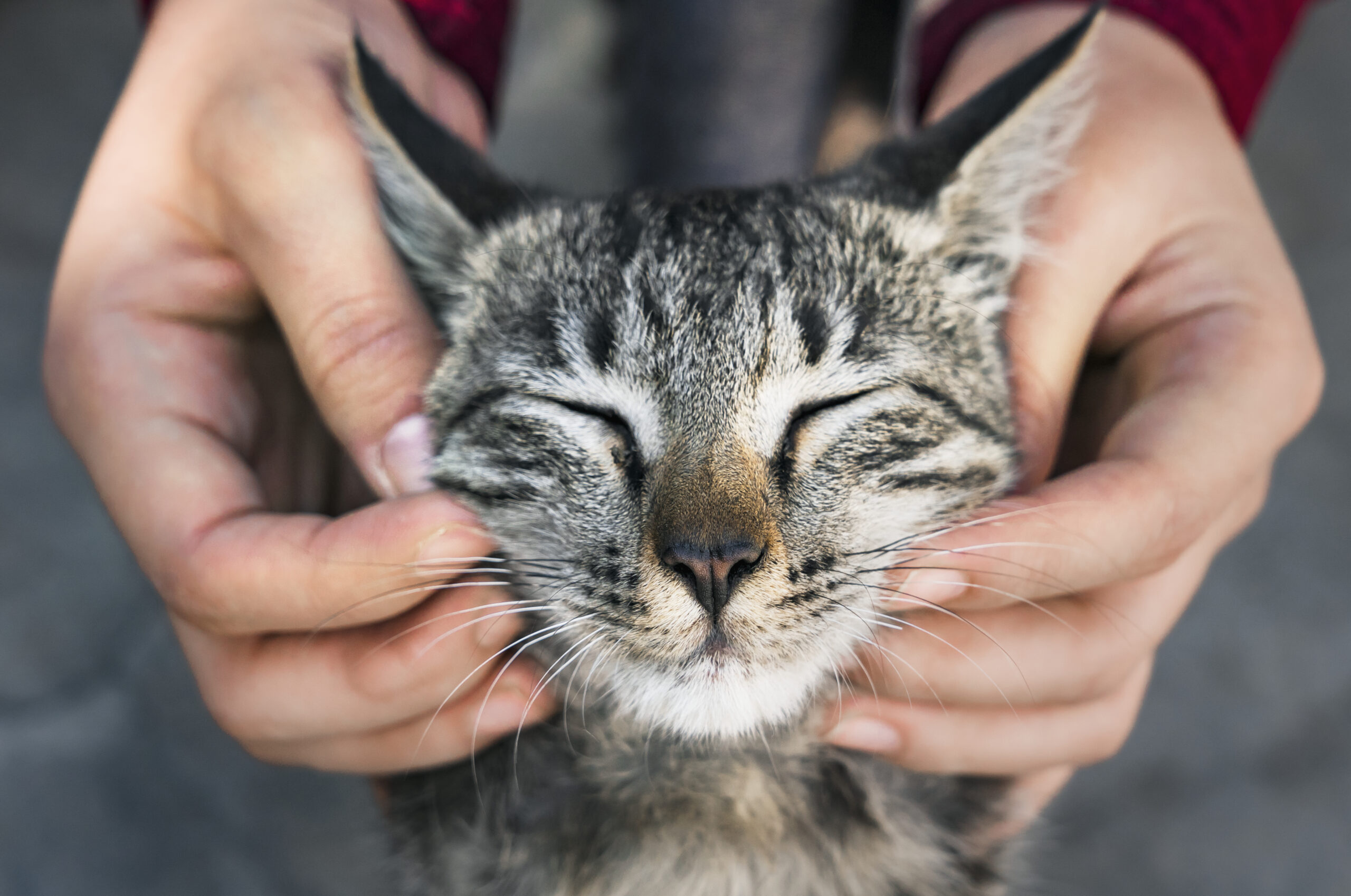
- Slow blink — a sign of trust and affection; often called a “cat kiss”
- Hard, unblinking stare — a challenge or threat signal
4. Body Posture
Relaxed and Happy
- Lying on back with belly exposed (though this is not always an invitation for belly rubs)
- Loose, relaxed muscles
- Sitting in a “loaf” position with paws tucked underneath
Fearful or Defensive
- Crouching low to the ground
- Arched back with fur standing on end
- Turning sideways to appear larger
Playful
- Crouching with hindquarters raised and wiggling before pouncing
- Dilated pupils and twitching tail tip
5. Vocalisations as Body Language
- Slow, rhythmic purring — contentment (though cats also purr when stressed or unwell)
- Chirping or chattering — excitement, usually when watching prey
- Hissing or growling — warning signal; the cat feels threatened
- Yowling — pain, distress, or in unspayed females, heat cycles
- Trilling — a friendly greeting, often used by mothers with kittens
Conclusion
Your cat is speaking to you every single day. By paying attention to their tail position, ear orientation, eye expression, and overall posture, you can build a much deeper understanding of your cat’s emotional state and needs. The more fluent you become in cat body language, the stronger and more trusting your relationship will be.


